
Contents
In short: Chemical labels use 9 hazard pictograms (GHS01–GHS09). Each is a black symbol inside a red-bordered diamond on a white background. Which pictogram is used follows from the product's hazard class; some pictograms are not used together. In Türkiye the rules are in the SEA Regulation (the Turkish CLP), in the EU in the CLP Regulation (EC) No 1272/2008.
The 9 pictograms and their meaning
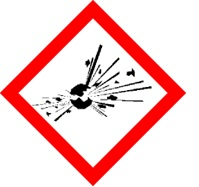
GHS01 · Exploding bomb
Explosives, self-reactive substances and the most severe types of organic peroxides. Example: unstable explosive (H200).
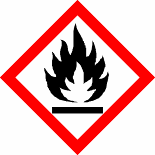
GHS02 · Flame
Flammable gases, aerosols, liquids and solids; pyrophoric and self-heating substances and substances that emit flammable gases in contact with water. Example: highly flammable liquid and vapour (H225).
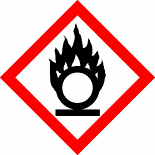
GHS03 · Flame over circle
Oxidising gases, liquids and solids: even if they do not burn themselves, they cause or intensify combustion. Example: may intensify fire; oxidiser (H272).
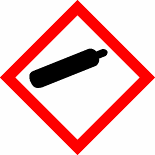
GHS04 · Gas cylinder
Gases under pressure: compressed, liquefied, refrigerated liquefied and dissolved gases. Example: contains gas under pressure; may explode if heated (H280).
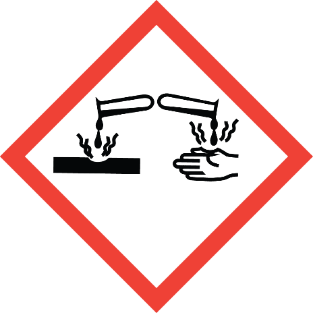
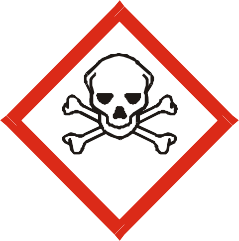
GHS06 · Skull and crossbones
The three most severe acute toxicity categories (1–3): fatal or toxic if swallowed, in contact with skin or if inhaled. Example: toxic if swallowed (H301).
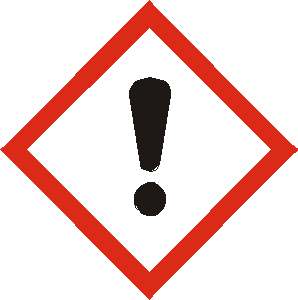
GHS07 · Exclamation mark
Less severe health hazards: acute toxicity category 4, skin and eye irritation, skin sensitisation, respiratory tract irritation or drowsiness (single exposure, category 3). Example: causes skin irritation (H315).
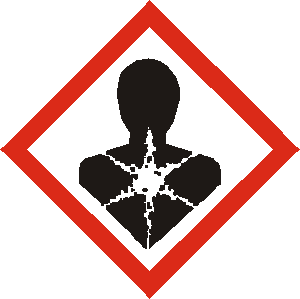
GHS08 · Health hazard
Long-term and serious health hazards: carcinogenicity, mutagenicity, reproductive toxicity, respiratory sensitisation, specific target organ toxicity and aspiration hazard. Example: may be fatal if swallowed and enters airways (H304).
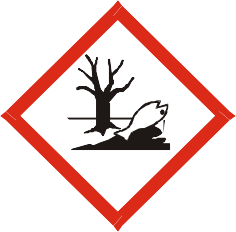
GHS09 · Environment
Aquatic acute category 1 and chronic categories 1 and 2. Chronic categories 3 and 4 get no pictogram. Example: toxic to aquatic life with long lasting effects (H411).
Pictogram and signal word
A pictogram alone does not tell you how severe the hazard is; the signal word does: Danger for the more severe categories, Warning for the less severe ones. A label always carries a single signal word; if one of the classes requires "Danger", "Warning" is not used. Some pairings are fixed: GHS06 always comes with "Danger", GHS07 always with "Warning". GHS08 can take either, depending on the category (e.g. carcinogen category 1B "Danger", category 2 "Warning"). Aquatic chronic category 2, which comes with GHS09, has no signal word.
Which pictograms are not used together?
When a product falls into more than one hazard class, the pictogram of each class is added to the label, but CLP Article 26 removes some duplications:
- If GHS06 applies, GHS07 is not used. The skull and crossbones already covers the hazard the exclamation mark describes.
- If GHS05 applies, GHS07 is not used for skin or eye irritation. The exclamation mark stays if it is required for another class (e.g. acute toxicity 4).
- If GHS08 applies for respiratory sensitisation, GHS07 is not used for skin sensitisation or skin/eye irritation.
- If GHS01 applies, GHS02 and GHS03 are optional (unless more than one is mandatory).
- If GHS02 or GHS06 applies, GHS04 is optional.
Example: for a mixture that results in both skin corrosion (H314) and skin irritation (H315), only GHS05 appears. You can enter your own product's H codes into the CLP label tool to see which pictograms remain and why the others are dropped.
Format and size rules
- A red-bordered square standing on one corner; a black symbol on a white background.
- The red border must be wide enough to be clearly visible on the label.
- Each pictogram must cover at least 1/15 of the minimum surface area of the label and must not be smaller than 1 cm² (CLP Annex I 1.2.1).
- Black-and-white printing and pictograms without a border are accepted only for certain inner packaging and exceptions; on normal sales packaging the red border is mandatory.
How they differ from transport marks (ADR)
The ADR hazard labels used in road transport are coloured and differently designed (e.g. the red-background "3" label for flammable liquids). Section 14 of the GBF (the Turkish SDS) shows these transport classes, Section 2 shows the CLP pictograms; one does not replace the other. For a single-packaged product that is being transported, if the ADR label shows the same hazard, the CLP pictogram does not need to be repeated on the outer packaging (CLP Article 33).
Frequently asked questions
How many pictograms can a label carry at most?
The regulation sets no upper limit; all pictograms required by the classification appear on the label, except those removed by the precedence rules. In practice most mixtures carry 1–3 pictograms.
Are the old orange square symbols still valid?
No. Black symbols on an orange background belong to the old system (67/548/EEC and 1999/45/EC), and the transition period for mixtures ended in 2017. Today only red-bordered GHS pictograms are used.
Does a product classified as aquatic chronic 3 (H412) get GHS09?
No. GHS09 is used only for aquatic acute 1 and aquatic chronic 1 and 2. H412 appears on the label as a hazard statement but requires no pictogram and no signal word.
Are there pictograms for the new hazard classes (endocrine disruptor, PBT, PMT)?
No new pictogram was defined for these classes added in the EU in 2023; they are shown on the label with additional statements starting with EUH.
Sources
- CLP Regulation (EC) No 1272/2008, Articles 19, 20, 26 and 33; Annex I 1.2.1; Annex V (hazard pictograms).
- SEA Regulation (11/12/2013, Official Gazette No. 28848).
- Commission Delegated Regulation (EU) 2023/707 (new hazard classes).
- ECHA, Guidance on Labelling and Packaging in accordance with Regulation (EC) No 1272/2008.
Codes in this article
Related codes
H and P statements related to this topic; each is explained in the glossary with its full wording, thresholds and label use.
Related articles
- Label
UFI code and poison centre notification: a guide for exporters and importers
CLP Article 45 and Annex VIII: who notifies, compliance dates by use, the 16-character UFI on the label, update triggers, and the GB and Northern Ireland rules.
- Label
What must a chemical label contain?
Mandatory elements of a hazardous product label in Türkiye: supplier, product identifier, pictograms, signal word, H and P statements; label size and a checklist.
- Label
How to read H and P codes
Groups of H (hazard) and P (precautionary) codes, codes with letters (H350i, H360Fd), combined P statements, EUH statements and withdrawn codes.
Are the H/P codes and pictograms in your SDS consistent?
Classification, pictograms, signal word and H/P statements must agree. If you already have an SDS, run the free SDS checker.